
A Black Forest Wedding
The Wedding of Georg Schmieder and Maria Anna Scheule
The air inside St. Stephan’s Catholic Church in Reichenbach, Germany, was filled with the fragrant scent of incense, gracefully rising above the flickering flames of the candlelit altar. Sunlight streamed through the vibrant stained-glass windows, casting a warm glow of heavenly radiance and illuminating the faces of the gathered guests. On this crisp Friday, March 20, 1893, the church served as the setting for a sacred union—the wedding of Georg Schmieder and Maria Anna Schüle.
Father Konrad Bauer, the parish priest, presided over the ceremony. The richness of his vestments created an air of regality, and his calm and reverent voice resonated from the elevated sanctuary. Karl Vetter, the sacristan, assisted with the preparations. Standing alongside him was Georg Schmieder, a relative from Oberhamersbach who served as a legal witness to the marriage.
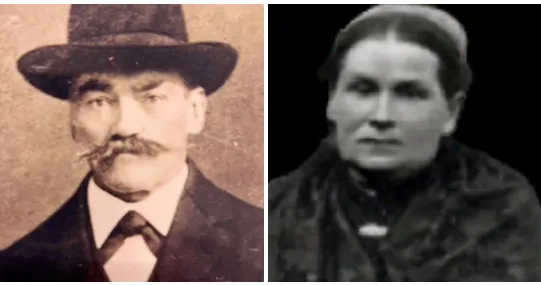
After exchanging their marital vows, Father Bauer bestowed the final matrimonial blessing. The couple turned to face the pews filled with family and friends. Dressed in traditional Black Forest wedding attire, they walked hand in hand down the aisle, stepping into the golden light as the church’s grand narthex doors opened. Georg, a lean and sinewy man about 5 feet 4 inches tall, grinned broadly, his thick, dark mustache curling in delight. With her strong, angular facial features, Anna Maria radiated beauty and strength.
The jubilant ringing of wedding bells echoed through the charming village, a happy herald of their new life together. The newlyweds were soon joined by Anna Maria’s father, Franz Anton Schüle, a farmer from the nearby village of Prinzbach, and her mother, Maria Anna Finkenzeller-Schüle. Their faces shone with pride and emotion as Maria Anna’s mother held her hand, realizing that this day signified both a joyful beginning and a bittersweet farewell.
Franz Xaver Schmieder, Georg’s father, also congratulated the couple with warm wishes. A widower since the passing of his beloved wife, Franziska Giessler-Schmieder, just eleven months earlier, he felt the weight of her absence on this otherwise joyous day. Though his heart ached, he found comfort in knowing that Georg and Maria Anna would continue the family’s legacy at their ancestral home—the Zipperhof, built in 1779 and formerly known as the Schwartzwaldhof, a historic farm in the serene Gereut Valley of Reichenbach.
A Journey Home
As the newlyweds stepped out of the churchyard, Georg guided his bride through the crowd of well-wishers, crossing a charming stone footbridge. Below them, a crystal-clear mountain stream flowed peacefully in front of the picturesque church, leading to a waiting carriage. He held her hand as he assisted her into the polished carriage. Holding the reins of a sleek, well-groomed horse, the driver stood ready. The horse’s breath rose in the chilly mountain air, carrying the scent of pine and fir from the nearby forests. A recent snowfall dusted the cobblestone street, giving the village an almost ethereal glow.
Georg wrapped Anna Maria in a thick woolen blanket before settling beside her. With a gentle flick of the reins, the coachman set the horse in motion, and they began their 3.5-mile journey to the Zipperhof. The sound of the horse’s hooves on the snow-covered road created a soft, comforting clip-clop, producing a soothing rhythm that harmonized with the gentle rocking of the carriage. As they traveled through the serene winter landscape, the tranquility of the Geruet Valley instilled a sense of calm. The stillness of time seemed to enhance this feeling as they made their way toward their destination—home.
The Enduring Legacy of the Zipperhof
For more than sixty years, the Zipperhof—named after Georg’s great-grandfather, Cyprian (Zipperian) Schmieder—has been more than a farmstead; it embodies a profound family legacy. Its weathered wooden buildings, rolling fields, and whispering forests tell a story woven with hard work, resilience, and rich tradition. Towering mountains stand as silent sentinels while a nearby stream flows like a gentle, timeless lullaby.
Before Georg and Maria Anna’s wedding, Georg’s father, Franz Xaver Schmieder, moved into the adjacent retirement cottage (Leibgedinghaus), marking the estate’s transition to the young couple. Embracing their new roles with steadfast commitment, they nurtured both the land and a meaningful life for nearly 34 years, raising five children: Xaver, Georg II, Theresia, Paul, and Mathilde. Their days were filled with the steady hum of the sawmill, the laughter of children by the stream, and the quiet strength found in the rhythms of farm life.
Yet, woven into the beauty of their days were threads of hardship—family challenges, two sons sent to fight in the Great War, one severely wounded, economic struggles, and the painful estrangement of their son Georg II, who emigrated to the United States.
Maria Anna’s sudden death on January 11, 1927, marked the end of a cherished chapter. Georg had to navigate the years ahead without his wife while holding onto the farmstead and the family they had been blessed to steward together.
As the years passed, Georg entrusted the Zipperhof to his son, Xaver. Their lives unfolded against a turbulent backdrop, marked by the devastation of another World War and the hardships of French occupation. Yet amidst the uncertainty, Georg found solace in the familiar contours of the land he loved. Each step along its well-worn paths reflected a life rooted in love, shaped by hard work, and sustained by family and unwavering faith.
When Georg passed away at the age of eighty-eight on a frigid January day in 1954, he left behind more than fields and timber. He bequeathed an enduring legacy—a testament to resilience, the unbreakable strength of family bonds, and a deep connection to the land and faith that shaped generations. His spirit lingers in the soil, woven into the rhythms of the farm and the hearts of those who carry his story forward.
Today, the spirit of Georg and Maria Anna endures, intricately woven into the rolling hills, forests, and modernized buildings of the Zipperhof—the land they once called home. Their lives, marked by profound joy and deep sorrow, reflect a journey of resilience, love, and unwavering dedication. Through seasons of abundance and times of hardship, they crafted a rich tapestry of perseverance, threading their hopes, struggles, and dreams into the very fabric of our family legacy. This enduring spirit lives on not only in the stories passed down through generations but also in the rhythm of our lives. Their legacy is more than history; it is a living connection, bridging our ancestors to the present and inspiring us, their descendants, to carry forward their strength, values, faith, and the unbreakable bond of family.
————————————
Note: This account of our great-grandparents’ wedding in 1893 is a tapestry woven from factual events and personal perspectives. This narrative encompasses individual interpretations and subjective reflections, recognizing the inherent challenge of accurately capturing every detail of past events.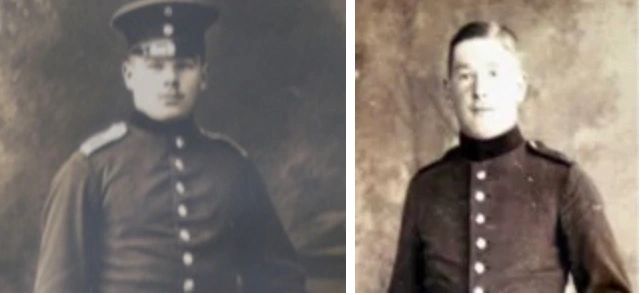
Frederick Schmieder