

Chapter 22 — Work of the Hands
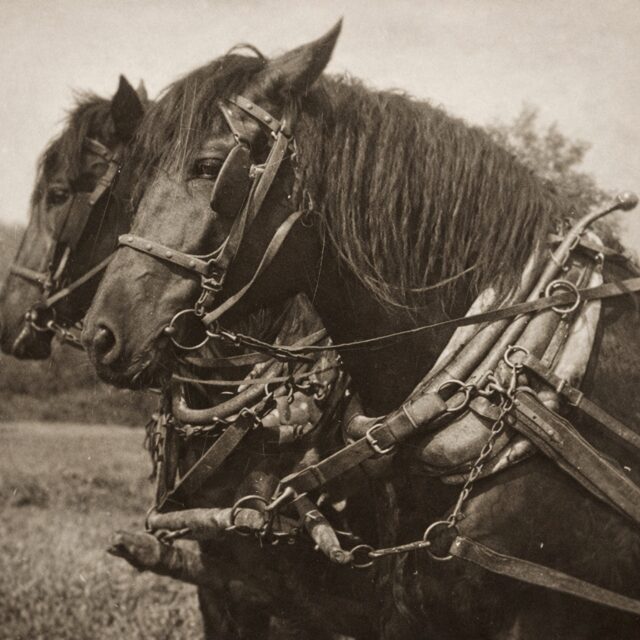
George Schmieder’s Team of Workhorses—the Power Behind the Farm
Set in the late spring of 1930, this chapter follows the steady work of planting, care, and household labor as one family prepares the ground and waits on what cannot be forced. From the fields to the church, it traces a season shaped by effort, patience, and faith.
The storm had passed, but its mark remained. Spring came late in 1930. A late-April snowstorm had taken the lives of three airmen and brought Erma Rosa to the Schmieder farmhouse. By the first week of May, patches of green returned to the pastures, hayfields were dotted with yellow dandelions, and the Tonawanda Creek flowed steadily. The fields were ready.
George walked the acreage above the house on the hill, its gravelly, well-drained surface, gauging the softness underfoot, lifting a clod and crumbling it between his fingers. The horses stood ready—leather oiled, hooves freshly trimmed and shod—while the disk harrow sat greased and waiting.
Several old apple tree stumps still dotted the field near the house, remnants of an orchard planted in the 1800s. Using shovels and a pick, George set a small charge of dynamite beneath one of the stumps. Arnold and young George broke from the yard toward the field, and George was after them at once, catching them by the arms and pulling them back hard, just before the blast.
Fields Ready
Molly and Duke, the smaller of the team, leaned into their collars, chains jingling as they pulled the disk through the loosening soil. George rode the steel seat, one hand steady on the reins, the other on the lever that adjusted the gangs. The discs clattered and squealed as they sliced through the plowed furrows.
Dust rose behind him, drifting on the warming breeze. He counted the passes and measured the field in his mind—rows, hills, seed potatoes—calculating how many would be needed to carry the family through another winter. Amid the pace of Molly and Duke and the rhythm of the harrow, the calculations pressed closer. The cows were milking well, but the price had slipped again. There was no margin to spare.
Work and Care
May 7 came on mild for early May, cool at first but warming steadily as the sun climbed. Dew lifted from the grass by midmorning, and the air settled into a comfortable stillness, the kind that made work easier and held the promise of a longer evening. The oats were already sown, the potatoes set into cool earth, and the remaining ground was being readied for corn and beans. The men and horses moved through the fields with the practiced rhythm, the longer days urging them on.
Behind the house, Magdalena—Rosa’s sister, newly arrived from Germany at Christmas—hung shirts, dresses, overalls, and diapers on the clothesline. The clothes were heavier this week, stiff with dirt from the fields and the added weight of diapers, her hands aching from the washboard under the strain of a full house. Wooden clothespins held each piece in place as the sun and a gentle breeze began their work.
The warmth stirred memories of her home in Schoenberg: spring air moving through open windows, wash lines strung outside, the rhythm of ordinary days, family left behind. Magdalena took her time, lingering in the light, letting the past pass quietly through her hands, her thoughts carried elsewhere.
Rosa stepped out into the yard with Erma, nearly 2 weeks old, at her breast, the baby quiet and drowsy in the warmth. The scent of apple blossoms drifted down from an old snow apple tree, and birdsong filled the spring air.
George Jr., Paul, and Herbie ran and circled nearby, their shouts rising and falling as they chased the chickens pecking in the yard, then waved to their father in the field. Rosa watched them, stealing glances down at the child in her arms, the small weight of new life settling against her.
Hilda, Fred, and Arnold walked to the old Cobblestone School in the village, carrying their lunches in brown paper bags—a fried egg or a jam sandwich on thick homemade bread and a cookie. At noon, children ate in the classroom or outside, where they played tag or baseball on the school lawn.
By suppertime, the light lingered, softening the yard and the fields alike, as if the day itself were in no hurry to end. The men came in slow and dirty, legs sore, hands stiff from reins, tools, and milking.
Late that night, sometime after ten, the house stirred. A dull thud passed through the ground, sharp enough to rattle the stovepipe and set the windows rattling for a moment. Rosa woke first, checking on Erma, who was sleeping in a cradle next to her. George sat up on the edge of the bed, listening, then walked around the house and peeked in on the children asleep upstairs.
It was nothing like the quake of August 12 the previous summer—nothing like the morning when the men were finishing chores in the barn, and Rosa was walking out to get milk for the children’s breakfast, when the ground moved beneath her feet, the barn groaned, and the cows grew uneasy. Chimneys had come down across the area then, including Father Gill’s roof at St. Vincent’s rectory, crushed when the bricks fell through.
The shaking this night passed almost as soon as it came. George waited a moment longer, listening for another tremor, then lay back down. By morning, the fields and cows would be waiting.
The days stretched from first light on, the men back in the fields. Now and then, they glanced at a pocket watch, gauging when to break for the midday dinner or turn back toward the barn for afternoon milking, the work repeating itself pass after pass. The fields changed slowly, the sameness pressing in even as the ground gave way beneath the plow and disc, their thoughts turning to the dinner Rosa and Magdalena had prepared.
Waiting
With planting nearly complete, seed in the ground, and the days running long, the season turned toward the familiar markers that followed. Rural Life Sunday was near, and with it the Rogation Days at the end of May—customs George and Rosa had known since childhood, when the work was finished and the waiting began.
Long before America set aside a Rural Life Sunday, farming families in the Black Forest had marked the spring with Rogation Days—the three days before Ascension Thursday, when parish processions moved through fields and village boundaries, praying for good weather, fertile soil, and protection from loss and misfortune. George and Rosa had grown up with those traditions: crosses carried ahead, litanies sung, the land blessed before the work was left to God’s keeping. With the seed largely in the ground, the season turned toward waiting—an acknowledgment that work alone was not enough.
When the newspaper spoke of Rural Life Sunday and President Hoover asked for blessings from heaven upon farmers, the language sounded new, but the prayer was not. It gave public voice to what they had learned early—to work first, then leave it to God’s keeping.
At St. Vincent’s, on Sunday, May 25, Father Gill added the old petitions to the Mass, asking God’s blessing on the fields and those who worked them. During the Rogation Days, the prayers were carried beyond the church walls, the land itself named and blessed as the waiting began.
Note: This account of George and Rosa Schmieder and their family life weaves together oral history, documented events, and family memory. It reflects the historical record where available and lived experience as remembered and passed down, recognizing that no account can fully capture a life across time.
Frederick Schmieder
Family Notes — Chapter 22: Work of the Hands
(Spring 1930)
Household at the Schmieder Farm
- George Schmieder
- Rosa (Beck) Schmieder
- Their children: Hilda, Fred, Arnold, George Jr., Paul, Herbert, and Erma
- Magdalena Beck (Rosa’s sister; arrived from Germany at Christmas 1929)
- Albert Beck (Rosa’s brother)
- Hired men boarding at the house:
- Benny Feist
- DeForest Krist
Work & Daily Life
- Laundry was done by hand using a washboard and clothesline, for a full household and additional hired men.
- Farm work followed seasonal rhythms of planting, milking, and field preparation, extending from first light into the evening.
Historical Context
Rogation Days—the three days preceding Ascension Thursday—were traditionally observed with prayers for favorable weather, fertile soil, and protection from loss.
Rural Life Sunday was observed locally on May 25, 1930, reflecting a national emphasis on farming communities during the Depression.