

Chapter 30 — The Loan
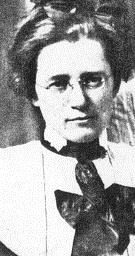
Sarah Magdalena Mader Miller — Attica, New York, circa 1900–1910. Photographed in earlier years. During the Great Depression, she extended a loan that contributed to the continued growth and stability of the Schmieder family farm and homestead.
The fields on the Schmieder farm had not changed—the same soil, the same fences, the same steady rise of pasture toward the crest—but what they yielded, and what that yield would bring in return, had shifted in ways no one could fully control. Milk prices had fallen to levels that scarcely justified the labor. Crops brought less at market. What had once sustained a family now required more acres, more cows, more work, and more careful planning, simply to hold steady.
It was a quiet arithmetic, but an unforgiving one, set against the pressures of the Depression and the loan obligations owed to Louis Shreder and Alice Day Gardener for the purchase of the farm in December 1928. There was no certainty in it—only the knowledge that to extend further carried its own risk, and that failure would not easily be undone.
Increase required more than effort; it required capital. The numbers stayed with him—carried through the fields and into the barn—returning in the quiet cadence of milk striking the pail, where thought and work moved together.
The answer, as it appeared to George Schmieder, was not withdrawal but increase. If each gallon brought less, then more gallons must be produced. If each acre yielded less in value, then more acres must be worked to meet what was owed.
The barn, as it stood, could hold only a limited number of cows. To grow the herd meant adding more—more lumber, labor, and time. New stalls would need to be built. Space had to be created where there was none. The work could not simply continue as it was; it had to grow.
Inside the house, the same steady pressures existed in a different form. Rosa handled the daily work of the home with the same steadiness George brought to the fields—cooking, washing, cleaning, and keeping things in order for a growing family whose needs did not lessen.
With seven children to tend, the work began early and carried through the day without pause—meals to prepare, clothes to wash, floors to keep, and the constant movement of small hands and voices under her care. There was little time set apart from it. Even so, she met each with the same quiet resolve and prayer to make it through the day.
Even small improvements—a washing machine to ease the long hours at the tub, cabinets to bring order to the kitchen—were not luxuries, but practical means of sustaining the household.
At school, Hilda and Fred heard other children speak of the radio. Not every home had one—far from it—but enough did that its stories traveled from child to child, retold in fragments, half remembered, and reshaped by imagination. In a time when money was tight and small luxuries were carefully weighed, a radio was something many families hoped for but could not easily afford.
In the homes that had one, families gathered in the evening, sometimes with neighbors, to listen as voices carried adventure, news, and music into the room. Children sat on the floor, their attention fixed on the soft hum and crackle of the Philco, where distant worlds seemed to come alive.
For those without one, like the Schmieder family, the radio existed just beyond reach. And yet, in quiet moments, it did not seem impossible that someday such a voice might find its way into their home.
George turned to his extended family, seeking the funds needed to expand the farm and better provide for Rosa.
He reached out to his uncle, Anton Schmieder, who was living in Buffalo and working as a caretaker for the Brothers of Mercy. It was not an easy request. Family ties carried both closeness and caution, and such matters were rarely taken lightly.
Anton, careful in his judgment, consulted with his son, Meinrad Eisenman, and Meinrad’s wife, Bertha Heitz Eisenman. After some consideration, Meinrad and Bertha advised against the loan.
The decision was final, delivered without ceremony. No harsh words were spoken, but something in the relationship shifted. From that point forward, the closeness that had once marked their connection gave way to a more restrained distance.
It was in this setting that the fifty-seven-year-old widow, Sarah Magdalena Mader-Miller, entered the story.
George J. Miller, her husband of nearly seventeen years, died in 1929 at the age of seventy-eight. He left behind two daughters, Grace, fifteen, and Arlene, thirteen.
As a young man, George left Wyoming County, New York, to farm in Wellington, Kansas. In 1912, he returned to New York to marry Sarah—he was fifty-nine, she thirty-seven—and for several years they made their life together on the Kansas farm. Around 1915, he brought his young family back to Attica, settling with Sarah and their infant daughter, Grace, on the Mader homestead off Exchange Street, where Sarah’s widowed father, John Christian Mader, lived until his death in 1925.
Sarah was not wealthy, but through discipline and careful living, she had maintained a modest savings reserve. She lived with her daughters, Grace and Arlene, in a home marked by quiet order, steady restraint, and a certain wariness of banks during the Depression, when savings could vanish as quickly as they were gathered.
In those years, such reserves were not easily entrusted to institutions. There were stories of banks that had closed their doors or opened them only to limit withdrawals. Money once thought secure had, for some, become uncertain or out of reach.
To lend in such a time was no casual matter. It required deliberation.
And so, when the arrangement was made, it was not done through distant offices, but across the kitchen table at the Mader homestead—Sarah Miller on one side, George Schmieder on the other, the terms understood without the need for many words, and later recorded at the county clerk’s office, securing the agreement in law as well as in trust.
The money allowed George to move forward—to expand the barn, grow the herd, and bring more land into production. It also made possible small but meaningful improvements within the house—things that eased Rosa’s work and brought a measure of order to her daily tasks.
It did not lessen the burden he carried. It added to it. And yet, it made possible the work that might sustain it.
There was, too, the hope—held without certainty—that the hard years might begin to ease, that prices might steady, and that the work now set in motion would, in time, be enough.
But the seasons did not always answer as hoped. There were weeks when the milk checks came in thin, and others when the cost of feed or repairs pressed harder than expected. The work continued just the same—day after day, without complaint—yet the margin between what was gained and what was owed remained narrow.
And so the hope did not disappear. It settled instead into a resolve to continue, to meet each day’s work as it came, and to trust that what was built might yet endure.
A Visit Off Exchange Street
The road into the village of Attica was familiar—past the storefronts and shops along Market Street. Hilda sat beside her father as they made their way down from the farm, holding an envelope with cash in her lap, careful not to bend it.
They turned onto Main Street as the farm truck sputtered and rattled beneath them, crossing the iron bridge over Tonawanda Creek. To their left, patrons moved in and out of the Crystal Pharmacy on the corner of Main and Water Streets, the door opening and closing against the morning air.
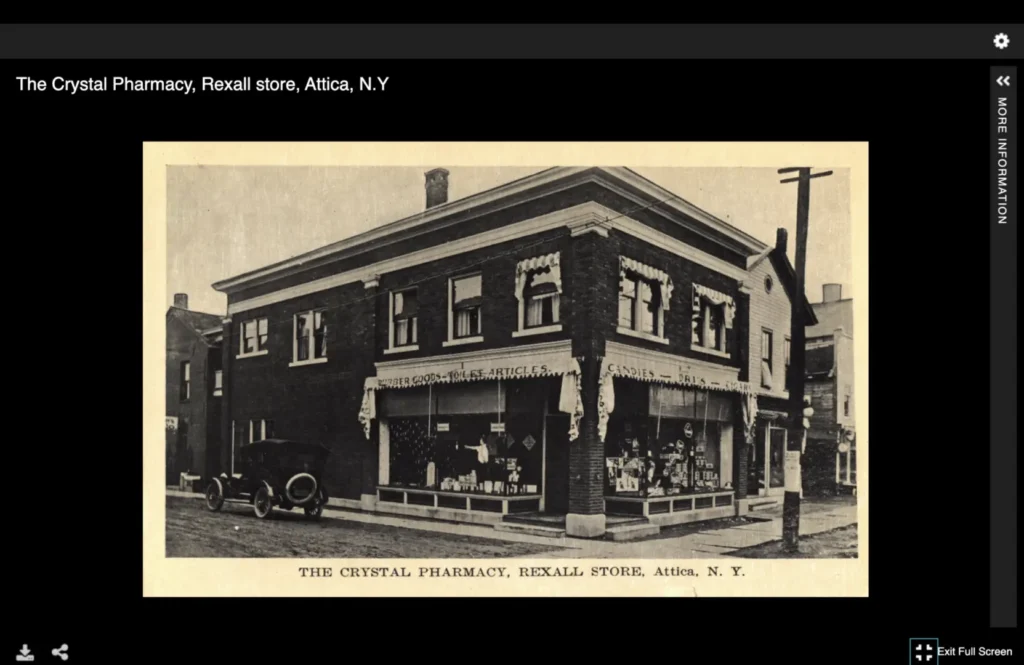
The Crystal Pharmacy, Rexall Store — Attica, New York, East Main and Water Streets, early 20th centuryA familiar corner in the village, where townspeople gathered for medicines, small goods, and the exchanges of daily life.
The truck lurched as George shifted gears, then steadied as they continued. He guided it onto Exchange Street, passing the Attica Hotel. He pointed to his left toward the Attica Train Depot, its presence a familiar marker along the road. It shook again as they crossed the railroad tracks, the boards thudding beneath the tires.
As they passed the high, gray concrete walls of Attica State Prison, George glanced toward them and said quietly that he had helped build it—hauling gravel to the site when the work first began. Hilda leaned slightly toward the window, trying to picture her father and Uncle Albert there—horses straining against their harnesses, wagons piled high with stone, wheels turning slowly through the dirt as load after load was brought in. It was hard for her to imagine that something so large had begun in such a way.
A short distance beyond, George slowed and turned off Exchange Street, guiding the truck into the driveway of a modest white farmhouse with dark wooden shutters, weathered and set slightly uneven against the windows—the home of Sarah Miller, where her father had once stood on that same porch in earlier years.
The house stood close to the road, its clapboard siding weathered to a soft, even tone. A narrow front porch ran along the entry, supported by simple posts, the paint worn in places where years of hands and seasons had passed. Wooden steps led up from the yard, their edges rounded and smoothed with use. Along one side of the porch, climbing vines traced their way upward, brushing lightly against the siding. The windows, framed with dark shutters, held the dim stillness of the interior against the brightness outside.
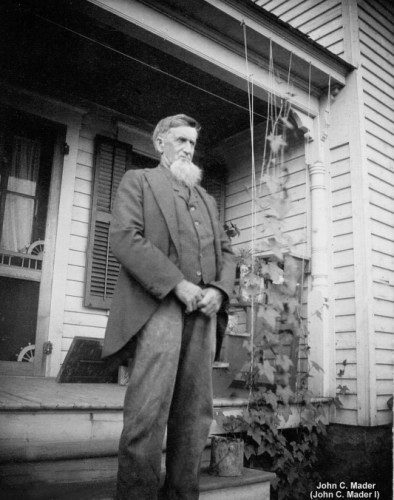
John Christian Mader stands on the porch of his home, later maintained by his daughter, Sarah Miller, whose careful stewardship carried the household forward after his death in 1925.
Their arrival stirred the yard. A dog began barking as they stepped down from the truck, the sound carrying across the stillness. Gravel shifted underfoot as George closed the door and made his way toward the porch.
Hilda followed close behind, the envelope still held carefully in her hands.
Together, they climbed the wooden steps and stepped onto the gray-painted porch, the boards giving a low creak beneath their weight.
George knocked.
After a moment, the door opened, and Sarah stood before them, her expression warm and familiar. Without hesitation, she stepped aside.
“Come in,” she said.
Inside the Miller House
The air inside was warm, carrying the faint scent of wood smoke and something recently baked. The room was simple but orderly—a table set near the window, a few straight-backed chairs, and a cupboard worn smooth at the edges from years of use. Grace, a recent graduate of Attica High School, and Arlene, still in her mid-teens, moved quietly about the room, attending to their chores with a practiced ease.
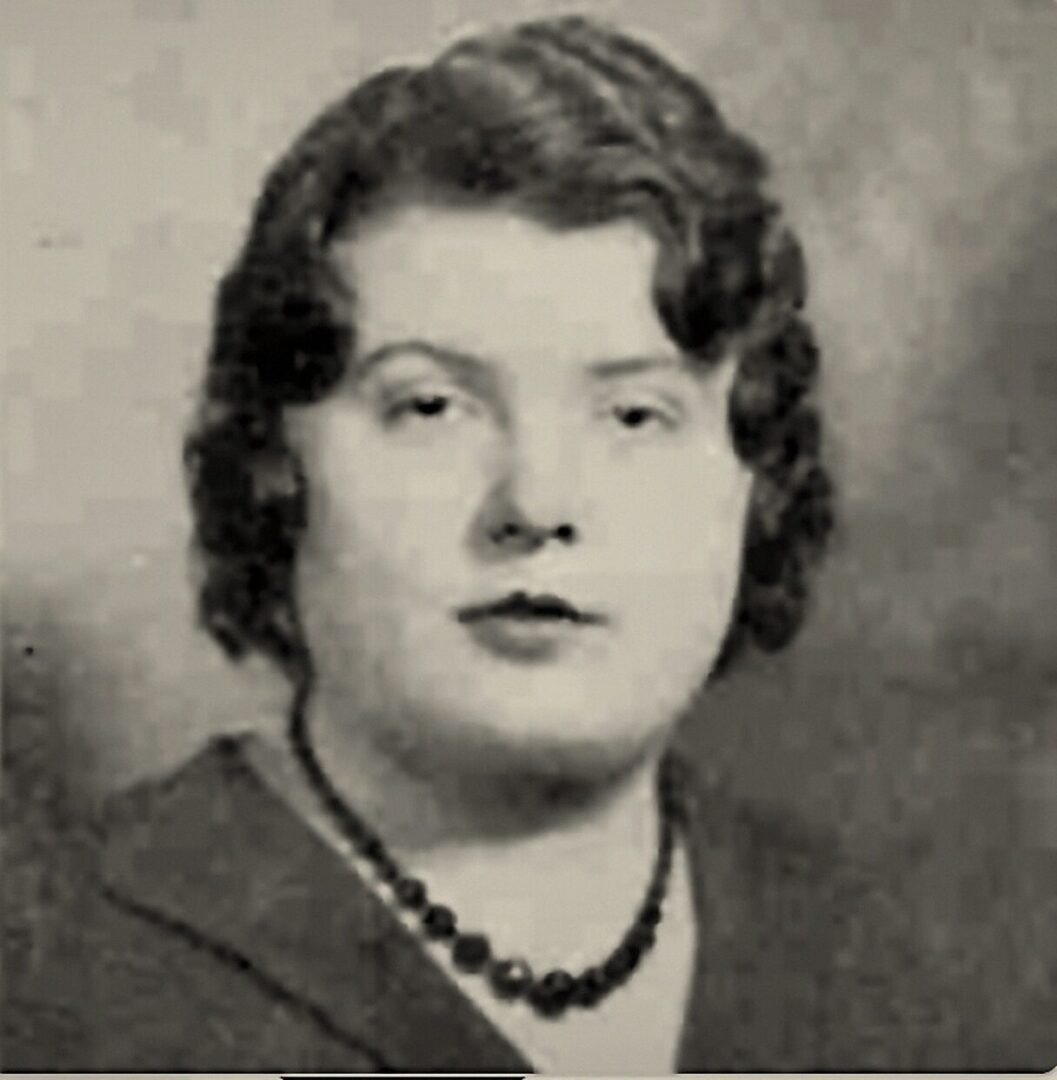
Grace Miller — Attica, New York, circa 1930. She shared in the household work with her mother, Sarah, and her sister, Arlene.
Sarah closed the door behind them.
Hilda remained close to her father, still holding the envelope. Its importance she did not fully understand, only that it mattered. These trips into the village carried a sense of adventure—the rattle of the truck, the passing of familiar places, the feeling of being included in something beyond the farm’s ordinary rhythm. Holding the envelope, she felt, in some small way, that she was part of it.
They spoke first of ordinary things—the family, the farm, the small turnings of daily life. Then, without ceremony, the purpose of the visit came forward.
Sarah brought a small ledger to the table, its pages marked with careful entries. The cover was worn smooth at the corners, the spine softened from years of opening and closing.
George set the envelope down and opened it, removing the bills he had set aside. He counted them deliberately, once, and then again, his callused hands steady. He paused for a moment before gathering them together, as if measuring not only the amount, but what it required of him to bring it forward.
Sarah followed along in the ledger, her finger tracing the line as he spoke the amount. Then she reached for her pen and made a careful entry, the faint scratch of the nib moving steadily across the page, the ink briefly glistening before settling into the paper.
George sat quietly as she wrote, his eyes resting on the page. It was a step taken forward—one that would hold him to the work ahead, whether the seasons answered as hoped or not.
Hilda stood quietly beside the table, watching the line appear and darken. It seemed a small thing, but once it was written, it did not change. She did not yet understand it fully, only that it marked something finished—and something she and her father would return to again.
The Road Home
As the truck rattled back along Exchange Street and over the tracks, Hilda sat beside her father, her hands now empty. The trip had felt significant, though she could not quite explain why.
Beside her, George drove on, the familiar road leading them home. His thoughts were already turned to the work waiting and the plans ahead.
What had been written in the ledger that morning would not change. What had been settled would come again—something she was only just beginning to understand, and something she looked forward to.
Note: This account of the Schmieder family’s life weaves together oral history, documented events, and family memory. It reflects the historical record where available, alongside the lived experience remembered and passed down through the family, recognizing that no single account can fully capture a life across time.
Frederick Schmieder