

Chapter 31 — A Washing Machine of Her Own
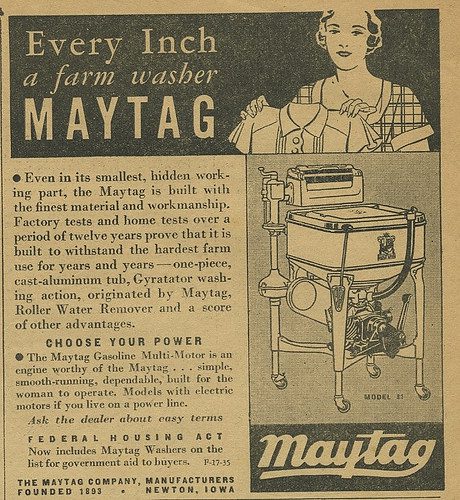
Each week, wash day came too quickly for Rosa. The routine was the same. It was not something she looked forward to, but neither did she resist it. It came as it always had—part of the order of the week—and she met it with the same steady resolve she brought to the rest of her work.
Wash day began before the light had fully spread across the farm. Rosa lit the kindling in the cookstove, and small flames took hold within the firebox as she fed in pieces of wood carried from the woodshed.
She moved between the well pump and the kitchen, hauling pails that grew heavier with each trip, lifting them carefully to pour into the stove’s water reservoir for heating.
By the time the first tub was filled, the adjoining mudwashroom, which led to the woodshed, had begun to steam.
She took up a bar of Fels-Naptha soap and, with a small knife, pared off thin shavings, letting them fall into the warming water where they softened and dissolved, turning it cloudy and slick to the touch.
She worked without pause. Clothes were sorted and lowered into the water, then lifted one by one to the washboard. Her hands moved in a steady rhythm—pressing, rubbing, turning the fabric back again until the dirt gave way. The work was quiet but constant, the swish of water and the metal grate of the washboard marking the passing of time.
When each piece was finished, she wrung it out by hand, twisting until the water ran free and her wrists felt the strain. Then it went into the rinse, where the work was repeated—lifting, turning, and wringing once more.
The basket gradually filled with clean, wet clothes. These were carried outside and hung on the line to dry, or, in colder weather, laid across a rack in the living room.
The ache in her body stirred a quiet hope that someday they might afford one of the washing machines she had studied by lamplight in the catalogs from Sears, Roebuck and Company and Montgomery Ward.
She had imagined the ease of it—the turning of a switch, the steady motion of the water without the strain of her hands. It was a small thought, and she did not dwell on it long. There was always other work to be done.
But the thought remained—especially on wash days—even in the hard years of the Depression.
With a loan from Sarah Magdalena Mader Miller and a five-dollar down payment, and the balance to be paid in monthly installments through Montgomery Ward, George placed the order.
The amount due each month was not large when taken alone, but he measured it against what the farm would bring in—the milk checks, the farm costs, the wages, the needs. It would come due whether the weather held or not, whether prices rose or fell.
Somehow, George would make it work.
From Plan to Action — The Trip to Batavia
After the decision was made, George made his way to the workshop on the second floor of the main barn. The space was quiet and ordered, tools arranged above a worn workbench, each one set back in place through long habit. Nearby, his Ford Model T truck stood waiting, its removable top fitted for the season, the wooden bed worn smooth from years of work.
Its hood and fenders were splattered with dust and dirt. George adjusted his hat as he stepped into the cab, the truck shifting slightly under his weight. He set the controls by habit, and the motor sputtered, then caught, settling into its familiar, uneven rhythm.
He eased the truck down the driveway and out onto Alleghany (Alexander) Road. The road carried him up and over Hall’s Hill before descending into the village of Alexander.
At the four corners, he brought the truck to a stop.
A filling station stood on the corner of Alleghany and Buffalo Street, across from Zwetch’s General Store—rebuilt after the fire of 1917 that had destroyed much of the business center. The pump stood near the road, its glass cylinder catching the light. Across Buffalo Street, another pump stood beside a small auto supply and repair shop, the two facing one another across the intersection.
George let the engine idle a moment before shutting it off.
A man stepped out from the station, wiping his hands on a rag.
“Mornin’,” he said.
George nodded. “Mornin’. Just a few gallons of gas.”
The man worked the handle, drawing the gasoline up into the glass cylinder. When it reached its mark, he released the valve, and the fuel flowed down into the tank in a steady stream.
George sat quietly inside the truck. The price—about twelve cents a gallon—was small enough to be paid without hesitation, yet not without notice. He counted it, as he did most things now, and placed the coins in the man’s hand.
A moment passed before the engine turned over again. George eased the truck forward into the intersection. With one hand steady on the wheel, he lit a hand-rolled cigarette, the smoke rising briefly before trailing off behind him as he continued on toward Batavia.
During the twenty-minute ride, he watched the farms and fields of the Hawkers, Wolfleys, and Spauldings pass in quiet succession, each one marked by the same steady labor he knew at home.
The Order at Montgomery Ward
He parked his truck along Main Street and stepped down, the noise of the city moving around him—passing cars, voices carrying between storefronts. A few doors down, the glass window of the Montgomery Ward catalog agency on Main Street reflected the street behind him. Inside, the space was smaller than a city store—orderly, practical. A long wooden counter ran along one side. Behind it stood shelves of thick catalogs, their pages worn from use. A clerk looked up as George entered, nodding in quiet acknowledgment.
He removed his hat and stepped toward the counter. With a catalog in hand, and in his German accent, he inquired about ordering an electric washing machine.
The electric machines cost less than the gas models, but even so, the total came close to what two months of milk checks might bring in. The figures had settled in his mind long before he arrived.
A five-dollar down payment would get it started. The rest would come in monthly installments—small enough to manage, but steady, and not easily set aside.
It was not a purchase made lightly.
The clerk drew the order form forward and began to write. The pencil moved steadily across the page—name, address, the item selected, the terms agreed upon. George stood quietly. He did not dwell on doubt, but neither did he ignore the obligation he was accepting. Still, he thought of the help it would bring to Rosa, and the small measure of ease it might give her days, as he watched each line set down.
When the clerk finished, he turned the paper slightly and set it before him.
George reached into his pocket and placed the five dollars on the counter. The bills were counted, the receipt written, and the order folded and set aside.
George stepped back out onto Main Street, the sounds of the village returning as before, quietly pleased at the thought of what it might ease for Rosa.
The Crate
It came by mail along R.F.D. No. 3 out of Attica, New York, carried by the rural mail carrier along the same route that brought letters, circulars, and the occasional catalog across the farms. The card itself was plain, its edges slightly bent, the message brief and practical—forwarded from the freight house in Batavia, noting that a crate had arrived under his name.
George turned it over once in his hands and read it again, though there was little more to take in.
Within the day, he returned to Batavia. At the freight house, the crate was brought forward and lifted onto the truck bed, its weight settling firmly into the wooden slats.
When he turned into the lane, he backed the truck across the lawn toward the cellar door. It moved slowly over the familiar ground, the crate shifting slightly with each uneven rise.
For a moment, he remained seated, taking one last draw from his cigarette before setting the brake.
Rosa, Magdalena, and several of the children heard the truck and came to the doorway. Rosa stood there a moment, her hands still, her eyes moving from George to the crate in the back of the truck.
He went to the barn and returned with Albert and two wooden planks. They set them from the edge of the truck bed down to the cellar threshold. He adjusted them once, then again, making sure they held firm.
The crate containing the washing machine was heavy; its weight was fully felt as they worked it forward, guiding it to the edge of the truck bed. For a moment, it rested there. Then, with steady pressure, they eased it onto the planks. The wood took the load with a low, strained sound as the crate began its slow descent.
They guided it down the wooden cellar stairs, slow and deliberate, steadying it at each step and keeping clear of the low doorway above.
Once it was set in place, George took up a hammer and crowbar. The boards came away one by one, the sound of nails giving way echoing lightly in the dark cellar. As the last piece was pulled free, the crate opened to reveal the long-awaited electric washing machine.
It was clean and smooth, the metal cool beneath Rosa’s hand. A faint smile touched her face as she considered what it might ease.
It stood among the cellar’s stores—cider barrels, a still, potatoes, beans, apples, crocks of sauerkraut, and other provisions.
The First Load
The machine stood ready. Clothes were gathered, and the older boys, Fred and Arnold, carried heated water from the cookstove down the cellar stairs. They poured it carefully into the tub, the rising steam settling briefly in the cooler air. Slices of soap floated on the surface, softening at the edges as they dissolved, the scent familiar, unchanged.
George and Albert had seen to its place and its connections, checking what needed to be set right before stepping back. Rosa set the first pieces into the water, pressing them down gently before stepping back. Then she reached to start the motor.
In an instant, the agitator began to move.
The other children—Hilda, George, Paul, Herbert, and Erma—gathered in the cellar, drawn closer than usual, watching as the machine took up the work of washing their clothes. They stood near the wall and along the steps, their attention fixed on the movement in the tub, the sound of it unfamiliar.
No one spoke at first.
Hilda lifted Erma slightly so she could see, the younger girl leaning forward as the water swished and turned, the clothes rising and folding back on themselves. After a moment, Hilda set her down again, and they returned to their place among the others.
This was not the sharp, grating motion of the washboard, but something rhythmic and reassuring.
Rosa stood nearby.
The work was still there, but something had changed. The motion no longer came from her hands. It continued on its own.
When the first pieces were ready, she drew them out and fed them carefully through the wringer. The rollers caught the fabric and pulled it through, pressing the water back into the tub below. She guided each piece with both hands, attentive to its path, then set it aside.
The tub was drained and filled again, the machine ready for another load.
This new rhythm continued—machine and hand, each taking its turn.
When the last of the washing was set aside, the cellar grew quiet again. The machine stood still, and with a pull of the chain, the light went out.
Outside, the farm and fields were as they had been. Inside, something had shifted.
On that day, despite the weight of the Depression, Rosa stepped into a new way of work—one in which machines began to ease what had long been carried by hand.
What George had taken on in cost was returned, day by day, in the easing of Rosa’s work.
Note: This account of the Schmieder family’s purchase of their first washing machine weaves together oral history, documented events, and family memory. It reflects the historical record where available, alongside the lived experience remembered and passed down through the family, recognizing that no single account can fully capture their lives across time.
Frederick Schmieder