

Chapter 27 — “I Will Go to the Altar of God”
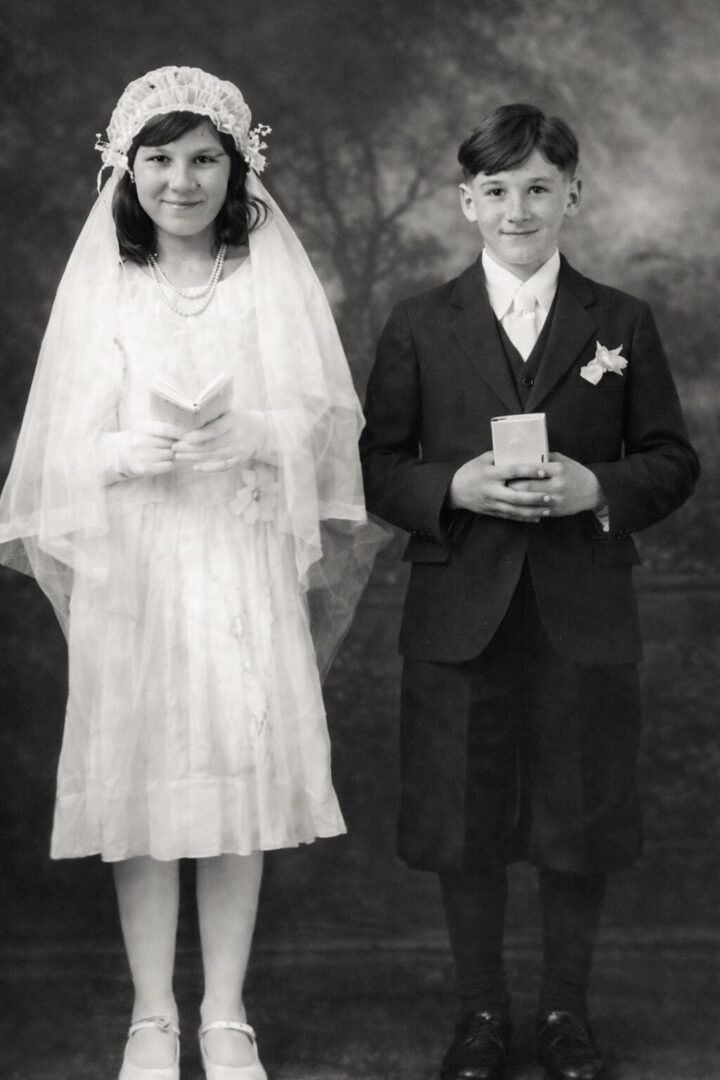
“I will go to the altar of God, to God who gives joy to my youth.”
— Psalm 43:4
Now they would approach the altar rail.
The same altar where farmers knelt each Sunday after long days in the fields beyond the village.
The same rail where mothers bowed their heads, lips moving silently, commending children and crops and burdens to God.
The parish had begun simply. In 1851, a small group of Catholic families purchased a forty-five-dollar lot near what is now Forest Hill Cemetery in Attica, New York, and raised a modest wooden church. It was enough—enough for Mass, enough for baptisms, enough for the dead to be commended to mercy when priests rode in on circuit from Batavia or Portage.
As Attica grew, so did the congregation. By 1881, a larger church stood on East Avenue to serve the growing parish. Its exterior was framed in wood, practical and unadorned. Inside, the plastered walls were light and smooth, and the sanctuary held a quiet brightness. Dark-stained wainscoting with thick trim ran the length of the nave. Sunlight filtered through tall stained-glass windows depicting scenes of faith and rested softly upon the white altar cloth. The thick walls gathered the priest’s Latin words and returned them in gentle echoes.
It was not a cathedral. It was a rural parish church.
And beneath its high ceiling, generations had been baptized, married, and buried.
That Sunday in May, at a special Mass for the First Communicants and their families, two immigrant children from a modest farm would step forward— Hilda in white, Fred in dark wool.
For at the altar, in that quiet church on East Avenue, heaven would draw very near.
The Barn Before Sunrise
Before the church bells would ring, before polished shoes touched the wooden floorboards of St. Vincent de Paul, the barn lamps were already lit.
The May sky was only beginning to pale when Fred stepped into the cool morning air. The pasture grass lay damp beneath his boots, and a thin mist hovered low over the Tonawanda Creek. He moved quietly among the cows, guiding them toward the barn, their warm breath rising in small clouds as they shuffled inside.
Within the dim light, he led them one by one into their stanchions. The familiar sounds followed—the soft jangle of chain, the steady exhale of animals settling into place. He fastened each head gate carefully, his movements practiced and deliberate.
First Communion or not, the herd kept its hour.
A lantern cast a warm circle of light against the hewn oak beams. Dust motes drifted slowly above the stanchions. The familiar smells—hay, warm animals, and straw—settled quietly around him.
George Sr. and Albert were already at work, feeding the livestock and preparing for the milking.
No special words were spoken. None were needed. Work began the way it always did—quiet, deliberate, practiced. Fred set his milking stool in place, wiped the flank, and leaned in. The milk struck the metal bucket in a steady rhythm, bright and warm in the half-dark, the sound echoing softly beneath the rafters. Nearby, a barn cat waited, hopeful for the small squirt of milk that sometimes came its way.
He knew the morning was different, a day set apart on his journey of faith. Yet the work of the farm came first—quiet labor offered in the early light, before the bells would call them to the altar.
He had confessed his sins the night before. The words still lingered in his mind.
As he worked, he felt both ordinary and set apart.
The barn had not changed. The beams were the same. The cows were the same. His father’s presence beside him was the same.
And yet, by midmorning, he would kneel at the altar rail and receive something that did not belong to fields or seasons, as generations before him had done—men with old names like Georg, Franz Anton, Sebastian, Cyprian, and Mathias.
George glanced once at his son, noting the seriousness and careful attention. There may have been a hint of pride there, though it went unspoken.
The work finished. Buckets were lifted.
The fresh milk would be strained through cloth into the tall cans and set in the water trough to cool, the cold water rising partway up their metal sides.
When they stepped back outside, the sun had risen over Hall’s Hill. Light spread across the fields and barnyard.
Fred paused for a moment.
Then he went to the well pump to wash.
Inside the Farmhouse
While the rising sun slowly replaced the light of the barn lanterns, the kitchen stove was already burning.
Hilda had risen early. In her room, her First Communion dress and veil hung carefully where she had left them the night before. Upstairs, the white dress waited quietly, as though the morning itself were holding its breath. She had paused to look at it once before coming downstairs, anxious to finish her chores.
Now she stood beside Rosa in the soft warmth of the farmhouse kitchen, where morning entered more slowly. The windows were faintly fogged from the cool night air. The coffee pot murmured on the back of the stove. The scent of warm bread lingered from the warming oven.
The house, too, kept its hour.
There were younger children to feed and dress. Erma’s diaper needed to be changed. Disagreements to smooth. Hilda moved carefully through the familiar tasks, aware of her white dress hanging in the bedroom, untouched for now. She did not want flour or ash to come near it.
The ordinary motions steadied her, though her eyes often drifted to the clock on the wall. Every few moments, her thoughts returned to the Mass that morning and to the First Communion awaiting her.
When the work was done, Rosa led her to the bedroom. The white dress was lifted carefully from its hanger. The fabric was simple but clean and freshly pressed, its soft pleats falling neatly past her knees. Rosa settled it over Hilda’s shoulders, fastening each button with deliberate care.
The veil came last. A small lace cap was placed gently over her hair, and the light veil fell softly about her shoulders.
As Rosa adjusted the veil, her hands lingered for a moment. For an instant, she was again a young girl kneeling in St. Stephen’s Church in Reichenbach, Germany, with her parents, Jakob and Monika Beck, seated behind her in the pew. The memory remained with her as she straightened the veil. Hilda stood patiently before her, her heart full of quiet joy.
From the doorway, young Paul and Herb stood watching. They had never seen their sister dressed this way—in white from collar to hem, a small prayer book resting in her hands. Their eyes widened at the sight.
In the next room, Fred stood waiting while George Sr. and Uncle Albert helped him dress. The white shirt was pulled carefully over his head and tucked neatly into his trousers. George lifted the narrow tie and worked the knot slowly beneath the collar, tightening it with practiced fingers. The dark suit had been pressed for the day, the small vest buttoned neatly beneath the jacket. Albert brushed a speck of lint from the sleeve and pinned a small white flower to the lapel. Only the day before, he had given Fred a careful haircut in the kitchen chair, the hand clippers tugging gently as the younger children watched nearby.
Fred stood still as they finished, holding his small prayer book against his chest. George straightened the tie once more, then stepped back and looked at his son for a moment before giving a quiet nod.
Dressed for the Altar
When they stepped into the room together, there was a brief stillness. Hilda stood in her white dress and veil, the soft folds of the fabric falling lightly about her shoulders. Beside her, Fred stood straight in his dark suit, the light tie neatly set beneath his collar and a small white flower pinned to the lapel. Each held a small prayer book.
From the doorway, their brothers—Arnold, George Jr., Paul, and Herb—stood watching. They looked from one to the other with wide eyes and quiet excitement, whispering among themselves as though something remarkable had appeared in the middle of the familiar farmhouse kitchen. Paul stepped forward a little, studying Fred’s tie and the flower on his jacket with careful interest.
Nearby, Aunt Magdalena held baby Erma on her hip. The child stretched out a small hand toward Hilda’s veil, drawn by the soft white fabric.
For a moment, Hilda and Fred glanced at one another and smiled, the morning light from the window settling gently across them. The work of the farm and the house was finished. Now they were ready.
The Road to St. Vincent’s
At last, Rosa gathered the children near the door, brushing a sleeve here, straightening a collar there, making sure everything was in order. Magdalena stood nearby, holding little Erma on her hip while the younger boys clustered around her skirts. George Sr. waited by the doorway, hat already in his hand. He glanced once at the clock on the wall and then at Hilda and Fred standing ready beside their mother.
“It’s time,” he said simply.
The door opened, and the fresh May morning air moved gently into the warm kitchen. Sunlight spread over the yard and the barn beyond, where the lanterns had long been extinguished. George and Rosa stepped outside with Hilda and Fred, leaving Magdalena and Albert in the doorway watching over the younger children as the four of them headed toward St. Vincent’s.
The car rolled slowly down the farm lane and onto the road toward Attica. The old car hummed and rattled gently as George worked the gears, its stiff springs rising and dipping over the uneven road. Fred and Hilda sat quietly in the back seat, their prayer books resting in their hands as the fields moved past the windows. Through the open window drifted the cool air of early May, mingled with the faint scent of warm engine oil.
As they neared the village, the houses drew closer together and the road narrowed beneath shade trees just beginning to leaf. Then, above the rooftops, the steeple of St. Vincent de Paul came into view, its cross bright against the morning sky.
As they turned onto East Avenue, the church came fully into view. St. Vincent de Paul stood quietly against the bright morning sky, its wooden walls and tall steeple rising above the nearby houses. White trim around the windows caught the early sunlight. Families were already arriving, making their way inside. George guided the car to the side of the street and brought it gently to a stop. For a moment, the children sat quietly, looking up at the church, which seemed larger than it had ever appeared.
Outside the church vestibule, the nuns were gathering the First Communicants. One by one, the children were guided down the narrow stairway to the basement, where they were lined up carefully for the morning Mass. The room was quiet but filled with soft whispers as dresses were straightened and ties adjusted. The sisters moved calmly among them, offering gentle reminders about folded hands, quiet voices, and the way they would walk to the altar rail. Fred and Hilda stood among the other children, their prayer books held close, listening carefully to the final instructions.
Procession from the Basement
At last, the sisters gave the quiet signal. The children formed two careful lines, prayer books held against their chests, hands folded over white gloves and dark sleeves. Slowly, they climbed the narrow stairs from the basement. As they reached the top, the cool dimness of the church opened before them. Sunlight from the stained-glass windows spread soft colors across the pews, and the first notes of the organ drifted through the air. One by one, they moved toward the front of the church, their small footsteps sounding softly on the wooden floor.
As the children reached the front pews, the altar came fully into view. It stood bright beneath the morning light from the tall stained-glass windows, a white cloth spread neatly across its surface and tall candles already burning. Above it rose the crucifix, Christ’s figure dark against the pale wall of the sanctuary while the organist played and the choir sang. The faint scent of candle wax and incense lingered in the air.
Fred and Hilda looked quietly toward the altar where, before the morning was over, they would kneel together for their First Communion. Generations before them had knelt in the same faith, though in churches far from this village, across the ocean and long before their own time.
The Elevation
The church grew still as the Mass moved toward its most solemn moment. At the altar stood Father Bernard Gill, a broad, steady figure as his voice fell into the quiet Latin prayers. A thin ribbon of incense drifted upward in the sanctuary. Then the small bells rang softly as he lifted the white Host above the altar. At the sound of the bells, many lifted their eyes toward the altar. Every head bowed. Fred and Hilda knelt with the others, their hands folded and their eyes raised toward the altar where the morning light fell upon the lifted Host. For a few silent seconds the whole church seemed to hold its breath as the white Host rested quietly in the morning light.
Approaching the Altar Rail
At last, the time came for the First Communicants to approach the altar rail. The sisters rose and guided the children forward in careful lines. White dresses and dark suits moved slowly up the center aisle, small prayer books held close and hands folded in practiced reverence. Fred and Hilda knelt among the other children at the rail as the long white communion cloth was drawn gently across their hands.
First Holy Communion
The church was very still. One by one, the children waited as Father Gill moved slowly along the rail, the paten held carefully beneath each chin. When he came to them, Fred and Hilda lifted their eyes briefly toward the altar and opened their lips to receive. The small white Host rested quietly upon their tongues—their first Holy Communion.
After Communion
When they returned to their pew, the church was filled with the soft murmur of prayers as other children took their places at the rail. Colored light from the windows rested quietly across the wooden floor. Fred and Hilda knelt quietly, their hands folded and heads bowed in silence. The sisters had reminded them to remain very still and offer their thanksgiving in quiet prayer, aware that something new had begun within them that morning—a quiet grace they did not yet fully understand.
When the Mass ended and the parishioners began to move toward the doors, Fred and Hilda stepped outside and down the wooden steps, where they waited on the sidewalk for Rosa and George to emerge with the other families.
The May morning had grown warm and bright. Sunlight filled the street, and the familiar sounds of the village drifted through the air as families greeted one another. For a moment Fred and Hilda stood beside Rosa and George, their prayer books still in their hands, the white dress and dark suit bright in the sunlight.
Though the same fields and barns waited beyond the village road, something unseen had quietly changed. That morning, beneath the wooden roof of the small church in Attica, Fred and Hilda had received the sacrament their parents, aunts, and uncles had carried with them across the ocean into this new land. Soon they would return to the familiar rhythm of farm and family, but the grace of that bright May morning would remain with them long after the day had passed.
Author’s Note
This account of Hilda and Fred Schmieder’s First Communion draws upon oral history, documented records, and family memory. It reflects the historical record where it is available and lived experience as remembered and handed down, recognizing that no narrative can fully capture a life across time.
— Frederick Schmieder
Historical Note — Fr. Bernard Patrick Gill
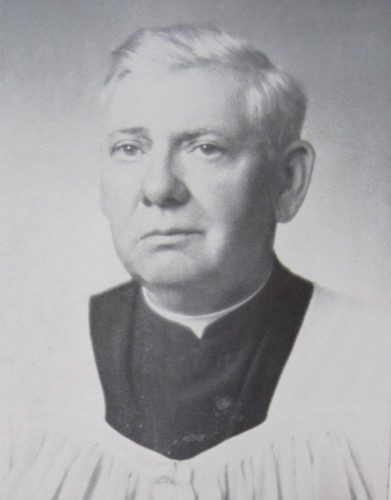
Father Bernard Patrick Gill (1881–1954) was born and raised on a farm in Belfast, New York. He was ordained on June 13, 1908, at Christ the King Seminary at St. Bonaventure in Allegany, New York. Father Gill served as pastor of St. Vincent de Paul Church in Attica, New York, from 1924 to 1937. He died on October 10, 1954, at Sisters Hospital in Buffalo at the age of seventy-three after suffering a heart attack.