

Chapter 33 — From Stream to Well: The Water of the Farm
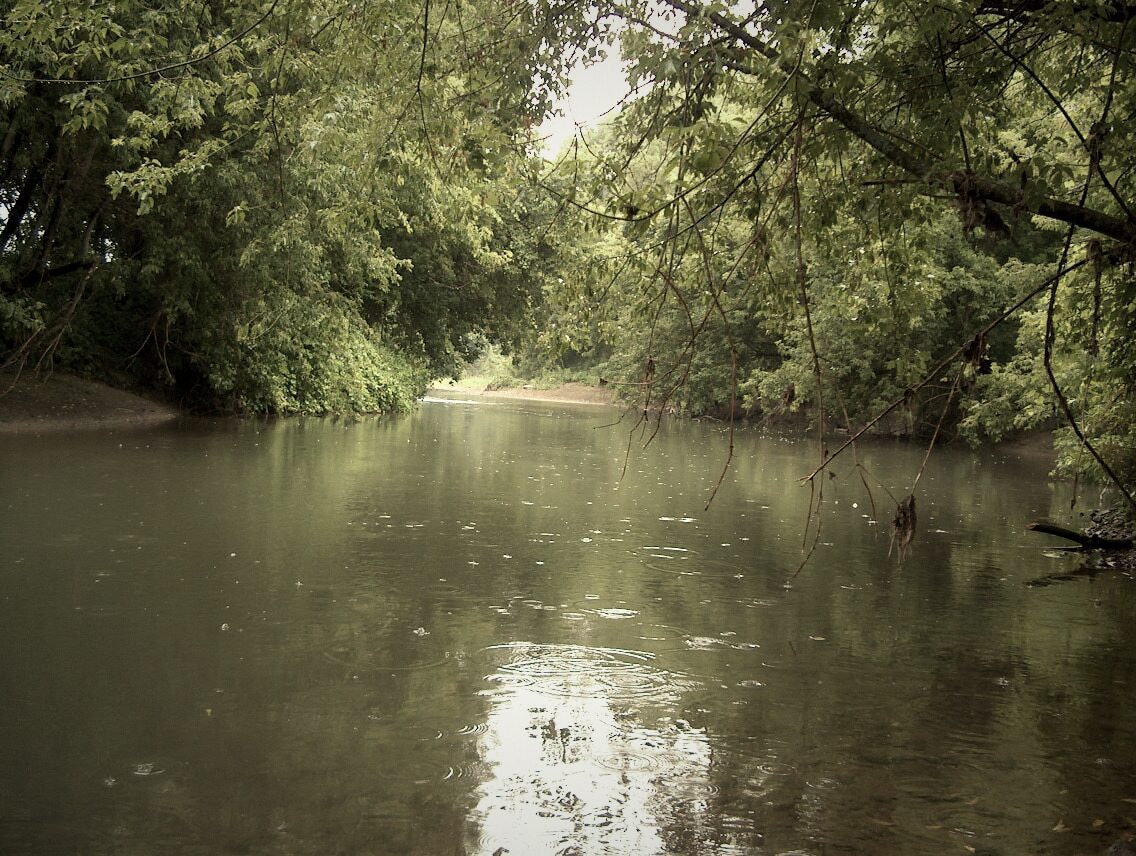
The Tonawanda Creek, bordering what would become the Schmieder farm, was a steady source of water for the region’s earliest settlers.
The First Water
Water determined where a family could live—and how long they could remain. For the first pioneers settling in the Genesee Country, in what would become Alexander, New York, the land itself provided what it could. Before wells were dug, small streams flowed quietly through the forests, and the nearby Tonawanda Creek—running parallel to a narrow wilderness trail from Batavia—provided a steady source of water for both families and livestock. The early pioneer cabins were built along the west side of the trail, and to reach the creek, families crossed the path, carrying what was needed back by hand.
But the creek offered more than water alone. As settlement spread across the region, its steady current became a source of power. Along the Tonawanda’s banks, sawmills and grist mills were built, their wheels turned by the force of the moving water. In 1804, Alexander Rae, for whom the town would later be named, built the first sawmill. Three years later, in 1807, William Adams constructed the first gristmill. Timber was cut and shaped, grain was ground into flour, and the labor of the land extended beyond the farm itself. In this way, the creek helped sustain and grow the local economy.
The Stream and the Well
On the land that would later become the Schmieder farm, the earliest families relied on what the land and its watercourses provided. The Wolcott Marsh family, the first to settle that tract, lived beside a small stream along the southern edge of their property, a stream shared with their neighbor Sebe Brainard and his family. To the north, on the Jonathan Hall property, another narrow stream flowed quietly across the back fields.
At first, this was enough.
But the streams did not always run as they had in the spring. In the drier months, the water slowed and grew shallow. After heavy rains, it ran clouded with silt, carrying what the land had loosened into its flow. What had once been dependable became uncertain.
As the farms grew and the herds and families increased, the streams alone could no longer meet the need. The settlers turned to the ground beneath them. Wells were dug by hand—slow, deliberate work through soil and stone. The Marsh family’s fifteen- to twenty-foot well was lined with fieldstone, carefully set to prevent collapse and to endure.
The Windmill
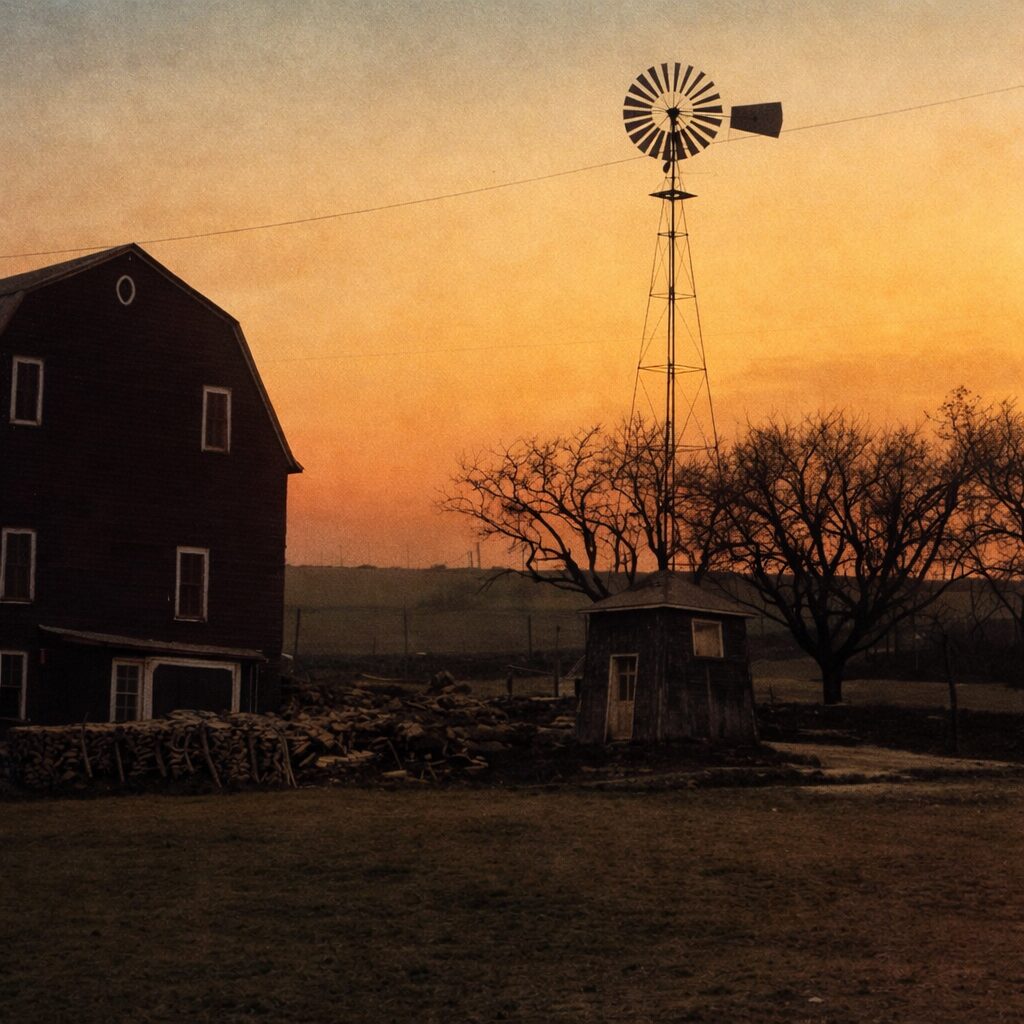
Before George and Rosa Schmieder purchased the farm in 1928, a windmill-driven pump stood over the barn well, drawing water up from below and sustaining the work of the farm.
As the barn was expanded over time by subsequent owners and generations on what would become the Schmieder farm, a windmill well pump was installed. The windmill stood just beyond the barn, its narrow blades catching what wind the hill would give. Most days, it turned without notice—slow and steady, its motion easy to overlook against the larger work of the farm. But its work was constant.
Beneath it, the well ran down into the ground, deeper than the old hand-dug one by the house. As the wheel turned, a rod moved up and down within the tower, lifting water a little at a time. From the base of the windmill, a pipe carried that water toward the barn, filling a watering tank for the cattle. It spared the work of carrying buckets and drawing by hand.
But the wind decided when it would turn.
On still days, the blades stood motionless against the sky, and the water did not rise. Then the older ways returned—the hand pump, the walk to the stream, the weight carried back again. The windmill had changed the work, but it had not taken it away.
Even so, when the wind moved across the fields and the wheel began to turn again, it brought with it a quiet kind of relief. Water would rise. The trough would fill. And for a time, the land gave what was needed, lifted by the wind above it.
On the neighboring farm, the Brainards constructed an additional structure for livestock: a four-by-four-foot concrete-sided well set into the stream itself, fed by both spring water and the steady current.
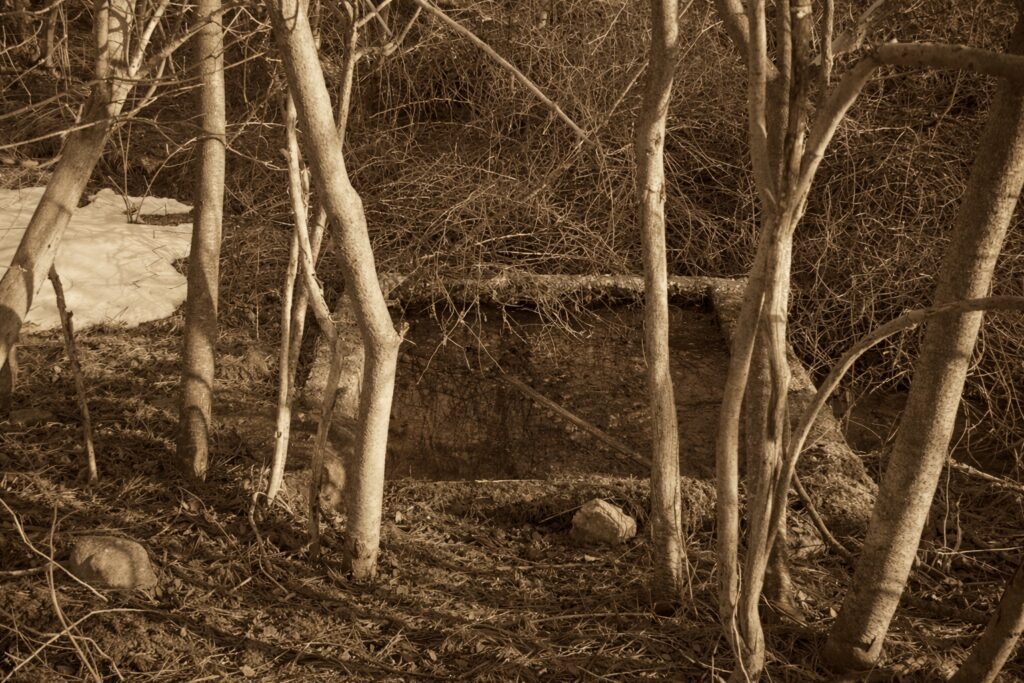
Set into the stream, the spring well at the Brainard farm—later purchased by George Schmieder—remains, having once drawn from both the current and the spring below.
By the time George Schmieder took up the work of the farm, the need for water remained unchanged—only the demands had grown.
When George and Rosa purchased the farm in December of 1928, the conditions at the house reflected an earlier way of living. The outhouse was located within the woodshed, attached directly to the house, while the well stood just outside the woodshed door. Likely the same hand-dug well, lined with stone years before, it continued to serve the house as it always had. It was a practical arrangement, but an unsafe and unsanitary one that would not remain unchanged.
In time, a gas-powered engine replaced the windmill. But the barn’s well no longer provided enough water for the herd. What had once been sufficient for smaller operations no longer met the demands of a working dairy farm. As others had done before him, George adapted the land to meet the need.
George’s Reservoir
In the upper pasture, he dammed a small ravine, holding back the natural flow to form a shallow reservoir. George, with Albert and the hired men, Benny Feist and DeForest Christ, worked the draft horses, Lonnie and Topsy, hauling rocks and clay soil by wagon to build up the dam. The horses leaned into their harnesses, the leather straps tightening as the load creaked forward under the weight. Iron rims pressed into the earth, and the stones shifted with a dull, heavy sound as they were worked off the wagon and set into place, the dam slowly taking shape.
Together, they dug a trench through the ground, laying lead pipe to carry water to the barn’s watering tank. The work was steady and deliberate—the scrape of shovels cutting into the soil, the resistance of clay and stone giving way in slow sections, the earth lifted and turned aside. Each length of pipe was set by hand, the line descending gradually toward the barn.
It was a practical solution compared with drilling a deeper well during the lean years of the Great Depression—made with what the land and labor could provide, sufficient for the time, though not the lasting solution the farm would later require.
But the seasons still held their authority.
In the winter, the pipeline would freeze, and the water slowed to a trickle. What had been brought under control could still be taken back by the cold. To restore it, a welder run by a generator was attached to the frozen line. For two or three hours at a time, heat was applied slowly, working its way through the pipe until the ice released its hold.
While this was done, the cows were turned out into the pasture, where they drank from the small stream, as livestock had done on that land long before pipelines or pumps.
The Old Hand Pump
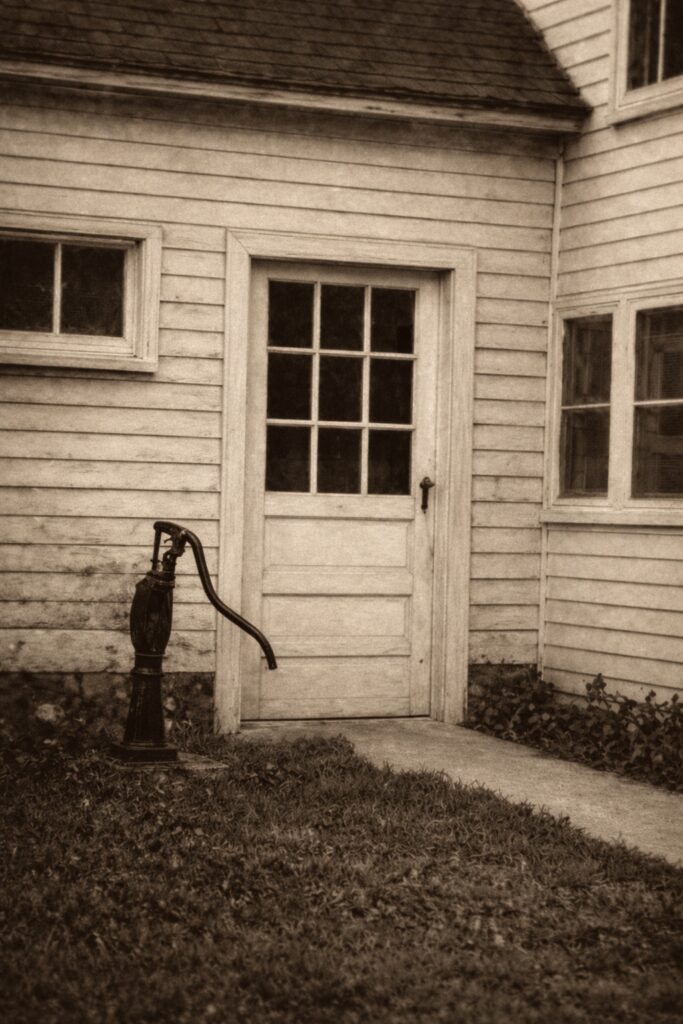
Just beyond the door, a cast-iron pitcher pump drew water from the shallow well below. In the years before plumbing reached the house, each stroke brought up what the day required. c. 1930s.
Closer to the house, another source remained—the older hand-dug well near the woodshed. Fifteen to twenty feet deep and lined with stone, its opening was partly covered by a concrete slab, with boards enclosing the remaining space around the hand pump. Rainwater and surface runoff often drained into it, mixing with what lay below.
When the family first moved into the house, it was their only source of water. A tin cup rested beside the rusty hand pump.
Water was drawn by hand, one stroke at a time—used for drinking, for cooking, for washing—everything measured by the effort it took to bring it up.
The well had been dug years before, lined with stone to endure. The methods around it had changed, but the need had not. Whether from the ground, the stream, or the reservoir, it sustained the farm as it had from the beginning.
Note: This account of the Schmieder family weaves together oral history, documented events, and family memory. It reflects the historical record where available, alongside the lived experience remembered and passed down through the family, recognizing that no single account can fully capture their lives across time.
Frederick Schmieder